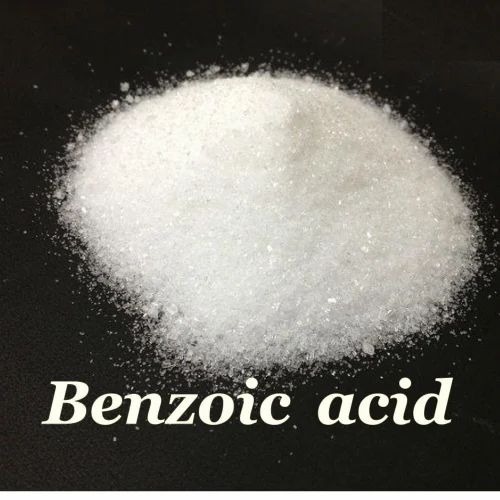
Benzoic acid is one of the most widely used aromatic carboxylic acids, found both in nature and synthesized industrially. As a vital organic compound, benzoic acid plays a key role in various industries such as food preservation, pharmaceuticals, cosmetics, plasticizers, and resins.
India has emerged as a major producer and exporter of benzoic acid and its derivatives, offering high-quality products at competitive prices. In this guide, we’ll explore everything you need to know about benzoic acid — its properties, applications, safety, manufacturing process, and top Indian benzoic acid suppliers.
What is Benzoic Acid?
Benzoic acid is a simple aromatic carboxylic acid with the formula C₆H₅COOH. It consists of a benzene ring bonded to a carboxyl group. Naturally occurring in some fruits and resins, it is usually manufactured synthetically on a large scale.
Chemical Profile:
Property
Value
Chemical Name
Benzoic Acid
IUPAC Name
Benzenecarboxylic acid
CAS Number
65-85-0
Molecular Formula
C₇H₆O₂
Molecular Weight
122.12 g/mol
Appearance
White crystalline solid
Melting Point
122 – 123 °C
Boiling Point
249 °C
Solubility
Slightly soluble in water; soluble in ethanol, ether, acetone
Odor
Slight pleasant odor
Natural Sources of Benzoic Acid
Benzoic acid occurs naturally in:
Cranberries
Prunes
Cinnamon
Clove oil
Berries (in small amounts)
Benzoin resin (from Styrax trees)
Although it is naturally present, industrial demand necessitates synthetic production for large-scale use.
Industrial Manufacturing of Benzoic Acid
The most common method of manufacturing benzoic acid is through the oxidation of toluene in the presence of oxygen and a cobalt or manganese catalyst.
Reaction:
mathematica
C₆H₅CH₃ +O₂ → C₆H₅COOH+H₂O
This method is cost-effective, scalable, and widely used across the globe.
Major Applications of Benzoic Acid
Benzoic acid is extremely versatile and is used across a wide range of industries:
1. Food & Beverage Industry
Used as a food preservative (E210).
Inhibits the growth of bacteria, yeast, and molds.
Commonly found in carbonated drinks, fruit juices, pickles, sauces, and jams.
Often used in the form of sodium benzoate, its salt form.
2. Pharmaceutical Industry
Used in ointment formulations for treating fungal skin infections.
Acts as a pH adjuster and preservative in syrups and solutions.
Part of benzoic acid and salicylic acid ointments for skin conditions.
3. Cosmetics & Personal Care
Acts as a preservative in skin creams, shampoos, deodorants, and facial cleansers.
Regulates pH and extends product shelf life.
4. Plastic Industry
Intermediate for the synthesis of plasticizers like benzoyl chloride, alkyd resins, and polyesters.
Used in caprolactam production, a key monomer for nylon.
5. Industrial Chemicals
Precursor to various organic compounds:
Phenol
Benzoyl peroxide
Benzoates
Benzimidazoles
Used in the synthesis of dyes, insect repellents, and antioxidants.
Grades of Benzoic Acid
Benzoic acid is typically available in different grades based on end-use requirements:
Grade
Use Case
Food Grade
Beverages, processed foods
Pharma Grade
Ointments, tablets, oral syrups
Industrial Grade
Plastics, resins, coatings
Reagent Grade
Laboratory and research use
Quality Specifications
Parameter
Specification (Typical)
Purity
≥ 99.0%
Moisture Content
≤ 0.5%
Melting Point
121 – 123°C
Heavy Metals
< 10 ppm
Color (Hazen)
≤ 50
Chloride/Sulfate
< 0.01%
Manufacturers provide COA (Certificate of Analysis) and MSDS (Material Safety Data Sheet) with each shipment.
Packaging & Storage
Standard Packaging:
25 kg or 50 kg HDPE bags with liner
Fiber drums
Custom bulk packaging available
Storage Guidelines:
Store in a cool, dry, and well-ventilated area
Keep containers tightly closed to avoid moisture absorption